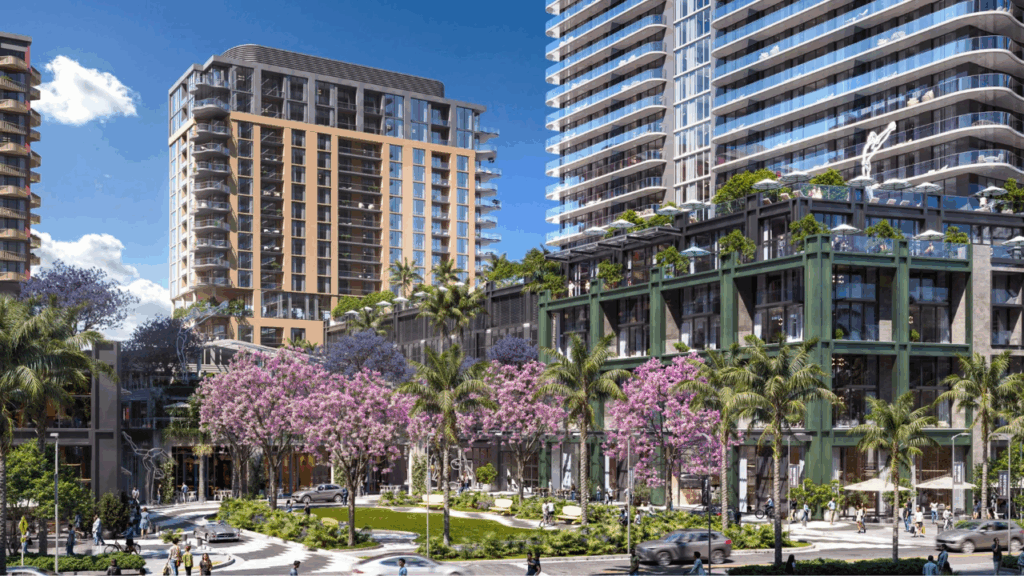
The $2 Billion Bet on Miami: What Midtown Park Reveals About the Market’s Future
Miami has always been a city that builds forward, even when the market says pause. The latest proof is Midtown Park, a $2 billion development reshaping one of South Florida’s most dynamic neighborhoods. Led by Rosso Development, the project is transforming a five-acre area between Wynwood and the Design District into a destination for luxury living, business, and recreation. The plan includes hundreds of high-end condominiums, office space, restaurants, shopping, and a public racquet and padel club. The design connects the creative spirit of Wynwood with the upscale energy of the Design District, creating a neighborhood where people can live, work, and play. A Vision Years in the Making This project has been in the works for more than a decade. The land was once owned by Walmart, which proposed a large retail store. Local residents pushed back, wanting something that fit Midtown’s personality. Rosso Development listened, taking years to collaborate with neighbors to create a plan that prioritized livability and lifestyle. Residents had long asked for more outdoor areas, playgrounds, and open space. Midtown Park delivers those elements, combining residential convenience with community purpose. By balancing development with design that benefits families and young professionals, Rosso’s team has positioned the project as both profitable and people-focused. Navigating Market Challenges Rosso acknowledges that today’s real estate environment is not without obstacles. Immigration changes and tariffs have made buyers more cautious, while the cost of materials has risen. Even so, early sales have been strong, signaling continued confidence in Miami’s property market. Many of the buyers are international families investing with the future in mind. Parents sending their children to study at Florida International University or the University of Miami see Midtown Park as a safe, long-term investment. The logic is simple: if their children stay and work in Miami, they will already have a home base in a thriving area. Phased Construction and Smart Momentum Instead of waiting for perfect conditions, Rosso Development is taking a phased approach to construction. Phase one, located on the north side of the property, is already underway. On the south end, a public padel club will open early in the process to ensure the area stays active and welcoming. This approach helps avoid the appearance of an idle site and keeps the community engaged as the project evolves. Rosso said, “We made sure at no time is there a part of the project that’s empty or not activated.” That strategy creates momentum, builds trust with investors, and keeps interest strong among potential residents and commercial tenants. Blueprints for Building Smarter in a Shifting Market For agents, brokers, and investors, Midtown Park offers more than just a local success story. It highlights several takeaways that apply across markets: These points show why Miami remains one of the most resilient real estate markets in the country. It is not just about luxury towers and high prices. It is about vision, timing, and understanding what people actually want from where they live. The Power of Patience Rosso’s philosophy toward this project is rooted in patience and confidence. “We’ve had this site for 10 years,” he said. “We can have it for another 10 more years.” That long-term mindset is rare in an industry that often prioritizes speed. But in markets like Miami, where growth moves in cycles, patience is a competitive advantage. The phased approach ensures that progress never stalls completely, even when challenges arise. This level of discipline helps create a stronger foundation for investors and residents alike. Heimata Breakdown Midtown Park is more than a development project; it is a model for how to build responsibly in a city that continues to evolve. It shows that even large-scale ventures can maintain a sense of community and purpose when designed thoughtfully. For real estate professionals, this development serves as both inspiration and reminder. Success in today’s market is not just about speed or scale. It is about creating spaces that meet real needs, balancing ambition with authenticity, and knowing when to move forward and when to wait.🔗 Read the full story on: CBS Miami